Hawker Grill · Skewered Meat
Satay
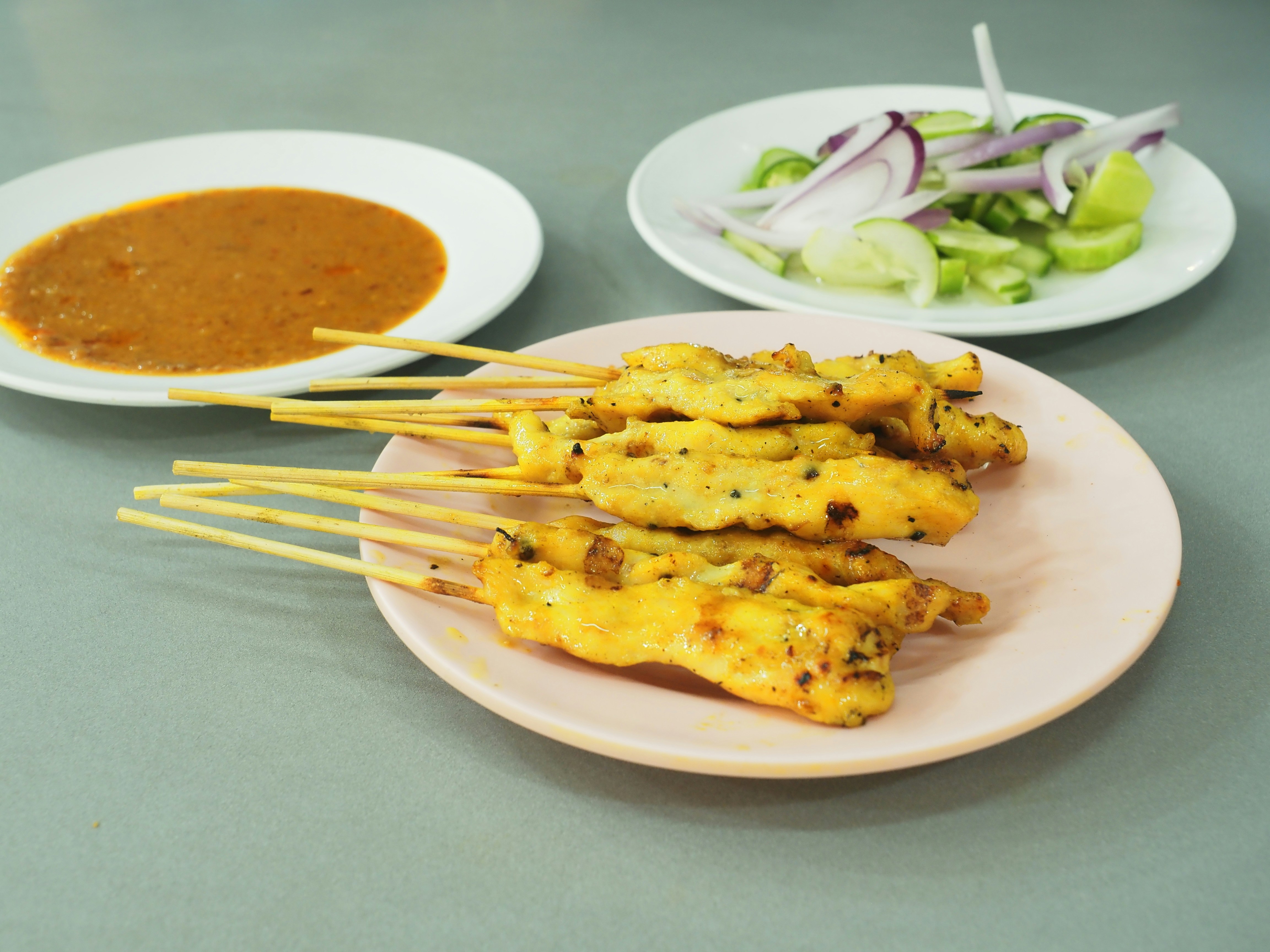
Photo via Pexels/Unsplash — free for commercial use
Traditional satay skewers were once cut from coconut palm leaf ribs, not bamboo — the stick itself shaped how big each bite could be.
Thin strips of marinated chicken, beef, or mutton are threaded onto skewers and grilled fast over open charcoal until lightly charred, then served with a thick peanut sauce, pressed rice cakes (ketupat), and raw onion and cucumber. At hawker centers like Lau Pa Sat, entire alleys fill with smoke each evening as vendors fan the coals by hand.
Why it's made this way: Satay is believed to have arrived with Arab or Indian Muslim traders who introduced skewer-grilling to the Malay Archipelago, and it became a hawker fixture in Singapore because a few skewers of meat could be sold cheaply and eaten standing up between errands.
Roughly what's in it
400kcal
26gprotein
18gcarbs
24gfat
Estimated per typical street-vendor portion — not lab-tested.
More from Singapore


Part of World of Street Food — 690 dishes from 118 countries.
Something wrong here? Tell us in the comments below.
Photo credits.